
5 Best Payment Gateway Providers in Bangladesh for 2026
If you sell online in Dhaka, Chattogram, or anywhere else in Bangladesh, you already know local payment rails matter more than which gateway has the flashiest dashboard. Finding a working bangladesh payment gateway means balancing bKash and Nagad support, taka settlement, and compliance requirements that most global providers simply weren't built for. Get this choice wrong and you're looking at failed transactions, delayed payouts, and customers abandoning checkout.
This article answers the question directly: which payment gateway providers in bangladesh actually deliver for merchants running e-commerce, fintech, or online platforms in 2026. We compare local mobile wallet coverage, settlement speed, KYC requirements, and support quality, because a provider that looks solid on paper often falls apart once real transaction volume hits.
Below you'll find five options worth evaluating, from established local processors to international payment gateway solutions built for cross-border merchants who also need USDT or stablecoin settlement. We built this list from actual merchant onboarding experience across South and Southeast Asia, not marketing pages, so you can pick a partner that handles both the technical integration and the compliance work behind it.
1. CoinPay
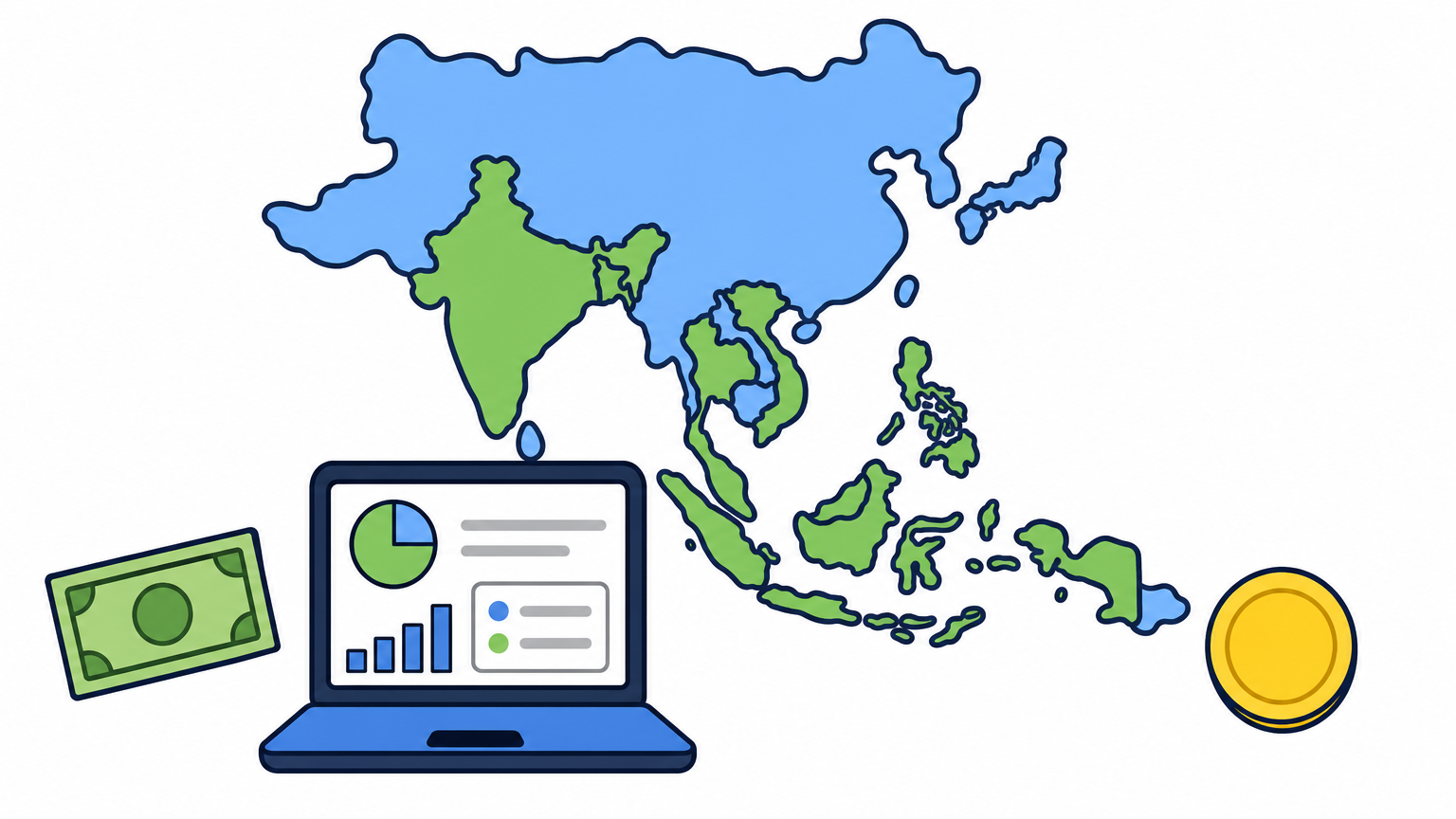
CoinPay built its business specifically around merchants who need a payment gateway service provider in Bangladesh that also understands cross-border settlement and stablecoin payments, with bKash, Nagad and BDT settlement for Bangladeshi merchants handled end to end. Unlike a pure local processor, CoinPay operates across Bangladesh, Thailand and its own set of gateway options, Vietnam, the Philippines, Malaysia, India, and Indonesia, which matters if your business plans to expand beyond one market or already runs regional operations. Merchants come to CoinPay after hitting friction with providers that only handle domestic rails or that lack the compliance depth to onboard fintech and gaming platforms.
What it offers
CoinPay pairs standard local payment method coverage with a separate USDT and stablecoin payment service, so merchants can offer both taka settlement and crypto rails from one relationship. The team also runs a case-study style consulting process, reviewing your deposit journey and flagging where customers drop off before checkout completes. This hands-on approach is what sets CoinPay apart from a plug-and-play API.
A payment gateway is only as good as the merchant support behind it once real transaction volume hits.
Who it's best for
CoinPay suits established e-commerce, fintech, and gaming operators who need an international payment gateway for Bangladesh alongside other Asian markets, and who expect ongoing performance monitoring rather than a one-time integration. It's not built for unverified startups looking for instant, no-questions signup. Businesses that pass CoinPay's KYC and due diligence review get a partner focused on long-term reliability instead of a simple pass-through connector.
Pricing and fees
CoinPay doesn't publish flat-rate pricing because fees depend on your market, transaction volume, and settlement currency, whether local or USDT. This is standard for providers doing structured merchant onboarding rather than instant self-service signup, and it lets CoinPay negotiate rates that reflect your actual risk profile and volume rather than a one-size-fits-all card.
How to get started
Getting started means submitting your business for CoinPay's structured application and verification process, which includes KYC checks and a review of your business model. Legitimate merchants typically move through onboarding within days once documentation is complete. You can start that process directly through CoinPay's payment gateway page, where the team walks you through documentation requirements before integration begins.
2. SSLCOMMERZ
SSLCOMMERZ is the name most Bangladeshi merchants hear first when they start comparing local processors. Launched over a decade ago, it built its reputation as the country's first PCI-DSS compliant payment gateway in Bangladesh, and it still handles a large share of domestic e-commerce transactions today.
What it offers
SSLCOMMERZ bundles bKash, Nagad, Rocket, all major local banks, and international card networks into a single integration, plus recurring billing and a hosted checkout page. It's built primarily for domestic taka settlement rather than cross-border or stablecoin payments.
A local gateway with broad wallet coverage still needs to prove it can settle reliably at scale.
Who it's best for
SSLCOMMERZ fits small and mid-sized Bangladeshi e-commerce stores that need fast bKash and Nagad acceptance without much cross-border complexity. It's a weaker fit for businesses expanding into other Asian markets or needing USDT settlement alongside local rails.
Pricing and fees
SSLCOMMERZ charges per-transaction fees that vary by payment method, typically higher for cards than for mobile wallets, plus setup costs depending on your business category. Exact rates require a quote, since risk category and volume both affect the final rate card.
How to get started
Merchants apply online with trade license documents and bank details, then wait for manual verification before sandbox access opens. Approval generally takes a few business days once paperwork is complete and consistent.
3. EPS (Easy Payment System)
EPS has been processing payments in Bangladesh since 2013 and built its name serving banks and government-adjacent institutions before expanding into general merchant services. It's one of the older names on any payment gateway list in Bangladesh, and that longevity shows in its bank partnerships.
What it offers
EPS connects merchants to a wide network of local banks, mobile wallets like bKash and Rocket, and card networks through a single API. It also supports installment payment plans through partner banks, a feature that matters for merchants selling higher-ticket electronics or appliances online.
Bank-grade infrastructure earns trust, but it doesn't guarantee fast merchant support when something breaks.
Who it's best for
EPS suits merchants who prioritize bank relationships and installment financing over speed of onboarding. Retailers selling durable goods, or platforms that need tight integration with specific local banks, tend to get the most value here. It's a less natural fit if you need multi-country coverage or crypto settlement alongside taka.
Pricing and fees
EPS doesn't advertise flat public rates. Pricing depends on transaction category, bank partnerships involved, and whether installment financing is part of the deal, so expect a custom quote rather than a rate card.
How to get started
Application requires business registration documents and a review process coordinated with EPS's banking partners. Onboarding tends to run longer than newer, tech-first competitors, since bank-side approvals add extra steps to the timeline.
4. PayStation
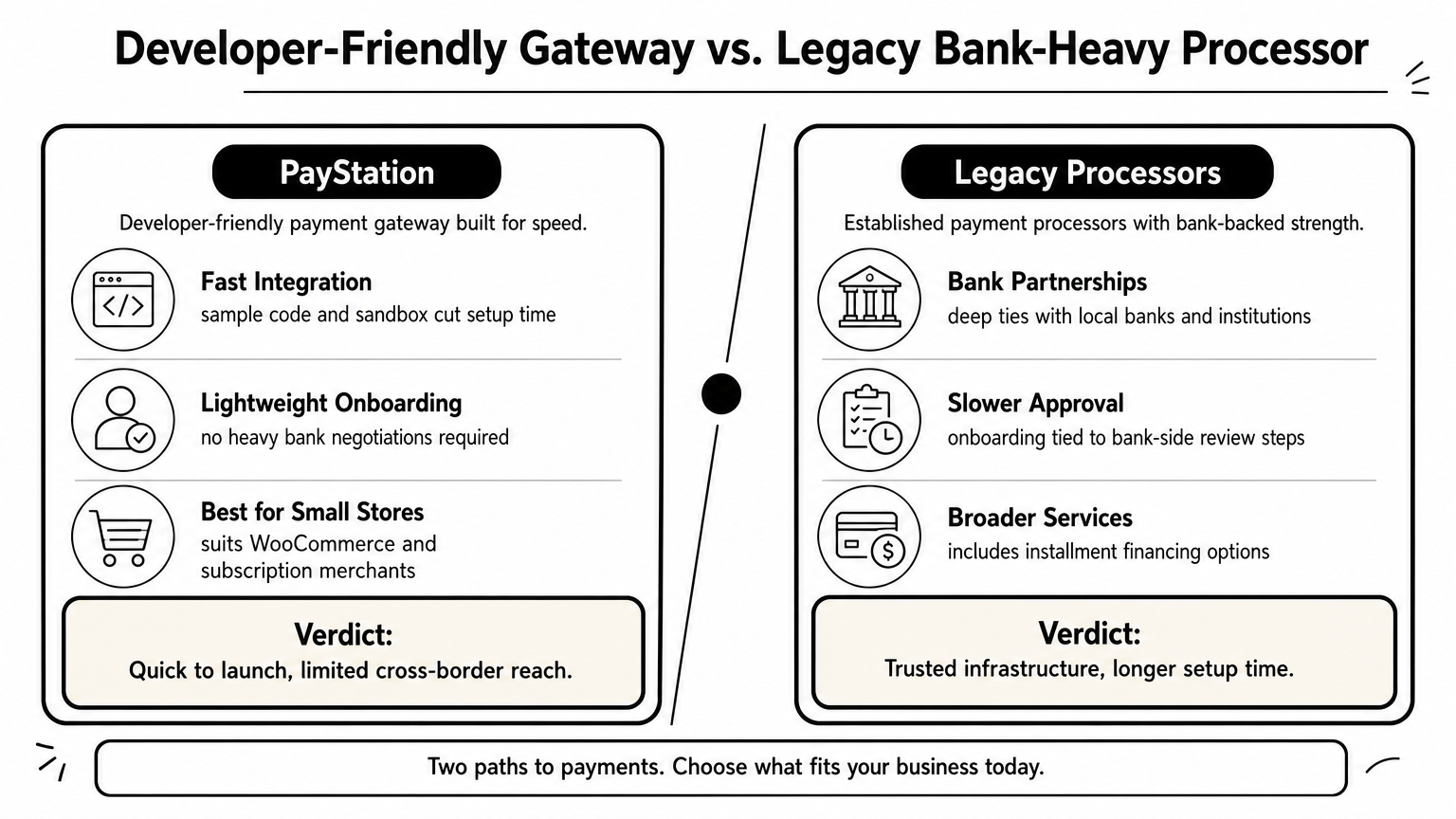
PayStation entered the Bangladeshi market as a challenger to the older names, positioning itself as a lighter, developer-friendly online payment gateway in Bangladesh for merchants who want quick technical integration without heavy bank negotiations. It's newer than SSLCOMMERZ or EPS, but it's grown a solid base among small online stores and subscription services.
What it offers
PayStation covers bKash, Nagad, Rocket, major bank cards, and a hosted checkout widget that's simple to drop into most e-commerce platforms. Documentation is developer-oriented, with sample code and sandbox testing that cuts integration time compared to older, bank-heavy processors.
Fast integration only pays off if settlement and support hold up once real customers start paying.
Who it's best for
Small to mid-sized merchants running WooCommerce, Shopify-style, or custom-built stores get the most value here, especially teams without a large in-house dev resource. It's a reasonable pick if you want a straightforward ecommerce payment gateway Bangladesh option and don't need cross-border or crypto settlement.
Pricing and fees
PayStation publishes indicative transaction rates on request, generally competitive with SSLCOMMERZ for card and wallet payments, though exact pricing depends on your monthly volume and business category. There's no truly free payment gateway in Bangladesh option among any of these providers, since setup and per-transaction costs apply regardless of scale.
How to get started
Signup happens through an online form requiring trade license and bank account details, followed by a verification call before sandbox credentials get issued.
5. AamarPay
AamarPay rounds out this bangladesh payment gateway list as another established local processor, active since 2015 and popular among small businesses, NGOs, and freelance platforms that need a quick way to accept online payments without heavy technical lift. It's a familiar name if you've searched any payment gateway list in Bangladesh, since it shows up in most WordPress and WooCommerce plugin directories.
What it offers
AamarPay supports bKash, Nagad, Rocket, major local bank cards, and international card networks through a single hosted checkout. Plugins exist for WordPress, WooCommerce, and several other common platforms, which shortens setup time for merchants without dedicated developers.
A gateway with ready-made plugins saves setup time, but plugin convenience isn't the same as long-term merchant support.
Who it's best for
Micro and small merchants, freelancers, and NGOs collecting one-off or recurring donations tend to get the most value from AamarPay. Larger platforms with complex settlement needs, multi-country operations, or crypto payment requirements will likely outgrow it fast.
Pricing and fees
AamarPay charges a per-transaction percentage that varies by payment method, with cards generally costing more than mobile wallets. There's a free payment gateway in Bangladesh trial period for sandbox testing, though production fees apply once you go live, and exact rates require direct confirmation.
How to get started
Registration happens through an online application with basic business documents, followed by manual review before live credentials get issued, typically within a few business days.
Choosing the right gateway for your business
Most merchants default to whichever provider ranks first in a search, but the right payment gateway in Bangladesh depends on what your business actually needs next year, not just today. SSLCOMMERZ, EPS, PayStation, and AamarPay all handle domestic taka settlement well, and any one of them can get a small store accepting bKash payments within days. None of them, though, were built for merchants planning cross-border growth or needing USDT settlement alongside local rails.
That's the gap CoinPay fills. If you're running an established e-commerce, fintech, or gaming platform across Bangladesh and other Asian markets, and you want a partner that reviews your deposit journey rather than just processing transactions, CoinPay's structured onboarding and multi-market coverage are worth the extra verification steps. Book a call with CoinPay's team for a free demo and see whether it fits your payment setup before you commit.