
10 Best UPI Payment Gateways in India: Fees and Features
Picking the best UPI payment gateway in India is harder than the marketing pages suggest. Razorpay, PayU, Paytm, and PhonePe all promise instant settlement and low fees. In practice, the differences show up in your effective cost per transaction, how quickly money lands in your account, and how the gateway handles failed payments.
Here is the short answer. For most businesses, the right choice depends on three things: your monthly volume, your tolerance for onboarding paperwork, and whether you need more than UPI. UPI itself is zero-MDR for most merchants, so the real fees hide in add-on services, settlement speed, and premium support tiers.
Below, you will find 10 gateways compared on fees, features, and fit. Each entry covers pricing and settlement terms, integration options, and who it suits best. At CoinPay, we have spent five years helping merchants across Southeast and South Asia, including India, set up compliant local payments. That experience shapes what we flag here: KYC requirements and payment friction matter as much as the headline rate.
Use the list to narrow your shortlist to two or three providers.
1. CoinPay
What it offers for UPI and India payments
CoinPay is a payment gateway provider for merchants in Southeast and South Asia. India is one of seven covered markets, alongside Thailand, Vietnam, the Philippines, Malaysia, Bangladesh, and Indonesia. Instead of handing you an API key and stepping back, CoinPay organizes operations by market, payment journey, and settlement needs.
Its approach is closer to consulting than to a plain connector. The team looks for payment friction, improves deposit journeys, and monitors performance after launch. If you also want stablecoin payments, CoinPay runs a separate USDT service, so crypto does not mix with your local rails.
Fees and pricing
CoinPay does not publish a flat rate card. Pricing is set per merchant after review, based on your market, volume, and settlement needs. That is less convenient than a public pricing page, but it fits businesses with non-standard flows. Before you sign, ask for a written quote that covers:
- The per-transaction rate for each payment method
- Payout or withdrawal fees
- Any reserve, minimum, or monthly charge
- Fees for support or custom reporting
Get these in writing so you can compare effective cost against the other gateways on this list.
Settlement and onboarding
Onboarding is deliberately strict. CoinPay screens every merchant through KYC, due diligence, and compliance checks, and it rejects scams, money-games, and deceptive schemes. The process runs in four steps:
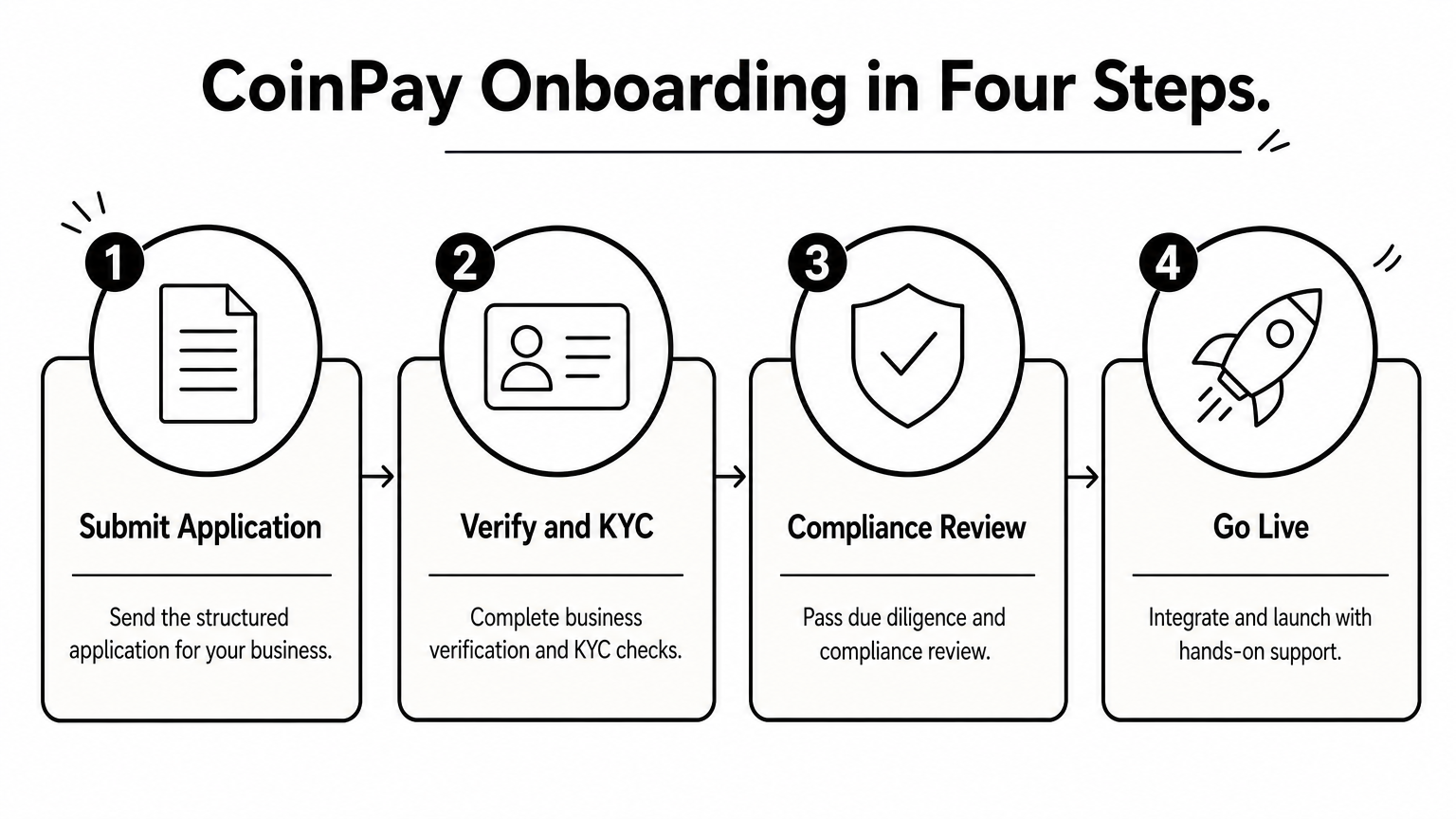
- Submit the structured application.
- Complete business verification and KYC.
- Pass due diligence and compliance review.
- Integrate and go live with hands-on support.
A gateway that screens merchants strictly protects your account as much as it protects itself.
Settlement terms depend on the market and your setup. In Thailand, for example, PromptPay payments settle in THB. Confirm the India settlement schedule and currency during your application, not after.
Who it is for
CoinPay suits legitimate B2B merchants in e-commerce, gaming, fintech, and other online platforms that want a long-term partner. It fits best if you operate in more than one Asian market and value a team that answers quickly after integration.
It is a poor fit if you want instant self-serve signup with no review. If that sounds like you, the later entries are faster to start. If you want a partner that knows the region, talk to CoinPay about your market and volume.
2. Razorpay
What it offers for UPI and India payments
Razorpay is the default pick for many developers, and it is a serious contender for the best UPI payment gateway in India if you value tooling. It supports UPI Intent, collect requests, and QR codes, plus UPI AutoPay for subscriptions.
Checkout, payment links, and invoices live in one dashboard. SDKs and plugins cover Shopify, WooCommerce, and custom builds, and the test mode is easy to work with.
Fees and pricing
Standard pricing has no setup fee and runs around 2% on most domestic payment methods, plus 18% GST on the fee. UPI pricing can vary by plan, so confirm the current UPI rate on the pricing page before you commit. Higher volume usually opens the door to custom rates.
Compare the effective rate after GST and add-ons, not the headline percentage.
Settlement and onboarding
Settlement typically follows a T+2 business day cycle, and instant settlement is available for an extra fee. Signup is online. You submit business documents, PAN, and bank details, and approval is often quick for standard businesses. Higher-risk categories get extra review, so expect more back and forth there.
Who it is for
Startups, SaaS companies, and D2C brands with developers on staff get the most from Razorpay. Skip it if you need a dedicated account manager at low volume or payment coverage beyond India. For multi-market merchants, that second gap matters.
3. PayU
What it offers for UPI and India payments
PayU is one of India's longest-running gateways and a serious option when you shop for the best UPI payment gateway in India at scale. It supports UPI Intent, collect, and QR payments alongside cards, netbanking, wallets, and EMI.
Its edge is checkout optimization. PayU markets routing and retry tools meant to lift payment success rates, which matters when failed UPI attempts cost you orders. Plugins cover Shopify, WooCommerce, and Magento.
Fees and pricing
Expect quotes around 2% on domestic methods plus 18% GST, with no setup fee on standard plans. UPI rates and custom pricing for higher volumes are negotiated, so get the current UPI rate in writing.
Watch the extras. Refunds, chargebacks, and international cards can carry separate charges, so compare effective cost against your real payment mix.
Settlement and onboarding
Settlement typically runs on a T+2 business day cycle, and faster options may be offered to eligible merchants. Ask what the faster option costs before you rely on it.
Onboarding is online. You upload PAN, GST details, bank proof, and business documents, and PayU reviews each application before you go live. Plan for extra scrutiny if you sell in a higher-risk category.
Who it is for
Mid-size and enterprise merchants get the most from PayU, especially high-volume e-commerce, travel, and lending platforms that care about every point of success rate.
Choose PayU when success rate at volume matters more than a cheap signup.
Small shops and early-stage teams may find it heavier than they need. If you want coverage beyond India, you will have to add another provider.
4. PhonePe Payment Gateway
What it offers for UPI and India payments
PhonePe Payment Gateway comes from the company behind the PhonePe app, which handles the largest share of UPI transactions in India. When a customer pays from that app, the UPI Intent flow is short and familiar, which helps conversion.
- UPI Intent, collect requests, and QR codes
- Cards, netbanking, and wallets
- Payment links and checkout plugins
Fees and pricing
Pricing is quote-based and varies by merchant, so do not assume a public rate card applies to you. UPI is zero-MDR for most merchants, which means your costs sit in other methods and add-ons.
Ask exactly which fees apply to cards, wallets, and refunds, and confirm that 18% GST is shown separately.
Zero-MDR UPI still leaves you paying for everything around it, so price the whole payment mix.
Settlement and onboarding
Settlement usually follows a T+1 to T+2 business day cycle, depending on your agreement. Confirm the cycle and any faster option before launch.
Onboarding is online. You submit PAN, GST details, bank proof, and business documents, and approval depends on your business category.
Who it is for
Consumer-facing brands in e-commerce, food, and bill payments get the most from it, especially when your customers already pay with PhonePe.
Skip it if you need hands-on account management or coverage across several Asian markets. In those cases, a partner built for multi-market operations fits better.
5. Paytm Payment Gateway
What it offers for UPI and India payments
Paytm Payment Gateway builds on one of India's best-known payment brands. It supports UPI Intent, collect, and QR payments, plus cards, netbanking, EMI, and the Paytm wallet. Customers who already hold a Paytm balance get a fast, familiar checkout, and the dashboard adds payment links and subscription tools.
Fees and pricing
Standard plans usually carry no setup fee, and UPI is zero-MDR for most merchants. Cards, wallets, and other methods carry a percentage fee plus 18% GST, so confirm the current rate card against your real payment mix. Ask about refund charges and instant settlement fees as well.
Paytm's brand is strong, but only the written rate card tells you what you will pay.
Settlement and onboarding
Settlement generally runs on a T+1 to T+2 business day cycle, and instant settlement is available as a paid option. Signup is online. You provide PAN, GST details, bank proof, and business documents, then wait for review.
Paytm's banking arm faced RBI restrictions in 2024. Before you sign, confirm which entity you contract with and that its payment aggregator authorization is current.
Who it is for
Retailers, utilities, and consumer brands whose customers already pay through Paytm get the most from this UPI payment gateway. It also suits merchants that want offline QR and online checkout from one provider.
Look elsewhere if you need dedicated account management at modest volume, or if you plan to collect payments in other Asian markets. Paytm is an India-only play.
6. Cashfree Payments
What it offers for UPI and India payments
Cashfree Payments is a strong pick for the best UPI payment gateway in India if you also send money out. Its gateway supports UPI Intent, collect requests, and QR codes, plus UPI AutoPay for recurring billing.
- Cards, netbanking, wallets, and EMI at checkout
- Payouts for vendors, refunds, and bulk transfers
- Payment links and split settlements for marketplaces
Fees and pricing
Standard plans carry no setup fee, and UPI is zero-MDR for most merchants. Cards and other methods usually cost around 2% plus 18% GST, so confirm the current rate card against your payment mix.
Payouts and instant settlement are priced separately. If you pay vendors often, check the fee per transfer, because it adds up faster than collection fees.
Cheap collections can still become an expensive setup once payouts and instant settlement are counted.
Settlement and onboarding
Default settlement runs on a T+1 to T+2 business day cycle, and instant settlement is available as a paid option. Ask what it costs per transaction before you build your cash flow around it.
Signup is online. You submit PAN, GST details, bank proof, and business documents. Approval often takes a few days, and a test environment lets your developers integrate while you wait.
Who it is for
Marketplaces, lending apps, and platforms with heavy payout flows get the most from Cashfree. One vendor handling both collections and disbursements means fewer reconciliation headaches.
Skip it if you only need a simple checkout for a small shop, or if you need payment coverage outside India. Like most gateways here, it is built around the Indian market.
7. Easebuzz
What it offers for UPI and India payments
Easebuzz is a Pune-based gateway and a strong candidate for the best UPI payment gateway in India if your business runs on fee collection or recurring billing. It supports UPI Intent, collect requests, and QR codes, plus UPI AutoPay for subscriptions.
- Cards, netbanking, wallets, and EMI
- Payment links, invoicing, and recurring billing
- Split settlements and payouts for platforms
Fees and pricing
Pricing is quote-based for most merchants, and UPI is zero-MDR for most merchants. Cards and other methods usually carry a percentage fee plus 18% GST.
A low UPI rate means little if cards and add-ons carry most of your volume.
Ask for the full rate card, including refund, payout, and instant settlement charges, before you compare it with other providers.
Settlement and onboarding
Settlement commonly runs on a T+1 to T+2 business day cycle, with instant settlement as a paid option. Confirm the per-transaction cost before you plan cash flow around it.
Onboarding happens online. You submit PAN, GST details, bank proof, and business documents, and approval depends on your business category. Expect extra questions in regulated or higher-risk sectors.
Who it is for
Schools, colleges, real estate firms, and nonprofits that collect recurring or installment payments get the most from Easebuzz. Growing platforms that need split settlements will also find it a good match.
Look elsewhere if you want dedicated account management at low volume, or coverage outside India. Easebuzz is built around the Indian market.
8. CCAvenue
What it offers for UPI and India payments
CCAvenue is one of India's oldest gateways, now run by Infibeam Avenues. It earns a spot in any search for the best UPI payment gateway in India if you sell to buyers abroad. It supports UPI Intent, collect, and QR payments next to cards, netbanking, wallets, and EMI.
- Multi-currency checkout for international customers
- Payment links, invoicing, and plugins for common carts
Fees and pricing
Rates are quote-based, and UPI is zero-MDR for most merchants. Cards and international payments cost more, plus 18% GST. Some plans have carried a setup or annual charge, so ask directly.
Get the full fee schedule in writing, including setup, annual, and refund charges.
Settlement and onboarding
Settlement usually follows a T+2 business day cycle, though terms depend on your plan. Confirm any faster option and its cost before you rely on it.
Signup is online. You submit PAN, GST details, bank proof, and business documents. Approval depends on your category, and cross-border selling can add extra paperwork.
Who it is for
Exporters, travel sellers, and online stores with international buyers get the most from CCAvenue. Established merchants who want a long-running provider will also feel at home.
Skip it if developer tooling is your top priority, or if you need local payments across several Asian markets. Its strength is breadth of payment options, not regional operations.
9. Decentro
What it offers for UPI and India payments
Decentro is an API-first banking and payments platform, not a classic checkout page. It earns a place among the best UPI payment gateways in India for builders who want UPI collections through APIs, with dynamic QR codes, payment links, and virtual accounts tied to each customer.
- UPI collections and payouts through one API set
- VPA validation and bank account verification
- KYC and onboarding APIs for fintech flows
Fees and pricing
Pricing is custom and quote-based, shaped by your use case and volume. UPI is zero-MDR for most merchants, so your cost usually sits in API usage, payouts, and verification calls. Ask for a full schedule that covers every endpoint you plan to use.
With an API platform you pay per capability, so list every call your product makes before you compare rates.
Settlement and onboarding
Settlement terms depend on your bank partner and account structure, so confirm the cycle and cutoff times early. Collections can be reconciled against virtual accounts, which helps finance teams match payments to customers.
Onboarding is more technical than a standard signup. Expect a business review, PAN, GST, and bank documents, plus a sandbox phase before production access. Regulated use cases such as lending draw extra scrutiny.
Who it is for
Fintechs, lenders, wealth platforms, and marketplaces with in-house engineering teams get the most from Decentro. It suits you if collections, payouts, and KYC must live in one stack.
Skip it if you want a ready-made checkout for a small store, or payment coverage beyond India. Decentro is built for developers who assemble their own payment flows.
10. SMEPay
What it offers for UPI and India payments
SMEPay is a UPI-first gateway built for small businesses, and it suits anyone hunting for the best UPI payment gateway in India on a tight budget. It centers on UPI QR codes and payment links, with plugins and APIs for common carts.
- Dynamic UPI QR and intent payments
- Payment links for chat and social selling
- Plugins and APIs for standard stores
Fees and pricing
Zero-MDR UPI is the main pitch, and it matches how most merchants are treated today. Confirm the current plan terms, since pricing pages change and some features may sit behind a paid tier.
Because the product is mostly UPI, your real cost comes from monthly plan fees, payouts, and add-ons. Get the full rate card in writing.
A zero-MDR headline only helps if plan fees and payout charges stay low too.
Settlement and onboarding
Settlement is marketed as fast, often close to real time, but the actual cycle depends on your plan and bank. Ask for the cycle and cutoff times before you plan cash flow around it.
Onboarding is online. You submit PAN, bank proof, and business documents, and simple businesses tend to clear review quickly. Expect more questions in regulated categories.
Who it is for
Small online sellers, freelancers, and local service businesses get the most from SMEPay. It fits you if you want UPI payments live in a day without a long contract.
Skip it if you need enterprise-grade routing and support, or payment coverage across several Asian markets. Larger teams will outgrow a UPI-only tool quickly.
How UPI gateway fees really work
Where the money actually goes
India set zero MDR on UPI in 2020, so most merchants pay no merchant discount rate on UPI collections. That is why every gateway above leads with cheap UPI. Your cost moves elsewhere, and the best UPI payment gateway in India for you is the one whose other charges stay low.
Zero-MDR UPI moves the cost around, it does not remove it.
Gateways earn from everything near the payment. Check each line below before you sign.
| Charge | Typical form | What to ask |
|---|---|---|
| Cards, wallets, netbanking | Around 2% plus 18% GST | Rate per method |
| Instant settlement | Percentage or flat fee | Cost per payout |
| Vendor payouts | Flat fee per transfer | Fee at your volume |
| Refunds and chargebacks | Flat fee, sometimes non-returnable | Whether the original fee is returned |
| Plan or setup | Monthly or annual fee | Minimums and lock-in |
Calculating your effective cost
Take a 2% card fee. After 18% GST it becomes 2.36%, so ₹1,00,000 in card sales costs ₹2,360. Add instant settlement, refunds, and payouts, and the real cost of a payment gateway in India climbs.
Build a simple model from your last three months of data. Split volume by method, apply each quoted rate, and add every flat fee. The result is your effective cost per transaction, and it is the only number worth comparing across providers.
How to choose a UPI payment gateway
Start with your business model
Your business type narrows the field faster than any rate card. Decide which of these matters most, then shortlist from the matching providers above.
- Subscriptions and installments: Razorpay, Cashfree, Easebuzz
- Heavy payouts and marketplaces: Cashfree, Decentro
- International buyers: CCAvenue
- Small shops on a budget: SMEPay
- Several Asian markets: CoinPay
Test the operational details
Next, look at what happens after launch. Ask each provider for its settlement cycle and cutoff times, how it handles failed and pending payments, and how fast support replies. A gateway that settles in T+1 but takes days to answer a ticket can cost you more than a higher fee.
Choose the gateway whose total cost and support you can verify in writing, not the one with the loudest headline rate.
Request the full fee schedule and compare your effective cost per transaction, using the model from the previous section.
Verify compliance and run a pilot
Finally, confirm that the provider holds a valid RBI payment aggregator authorization, and check which legal entity signs your contract. Then run a pilot. Send a small share of live traffic through your top two picks for two weeks, and track payment success rate, settlement timing, and reconciliation effort.
Those numbers will tell you more than any demo. Once you know which provider performs best on your real traffic, move the rest of your volume over.
Picking the right gateway for your business
The best UPI payment gateway in India is the one that fits your business, not the one with the loudest pricing page. UPI is zero-MDR for most merchants, so your effective cost per transaction comes down to cards, payouts, instant settlement, and support.
Shortlist two or three providers from the list above, using your business model as the filter. Then compare written fee schedules, confirm RBI authorization, and run a two-week pilot on live traffic. Success rate and settlement timing will settle the decision better than any demo.
If you sell in more than one Asian market, or want a team that stays involved after integration, CoinPay is built for that. Book a demo with CoinPay's team and bring your market and volume. We will walk you through onboarding and what your payment journey could look like.