
6 Best Shopify Payment Gateways in the Philippines for 2026
Running a Shopify store in the Philippines means dealing with a payment reality that most default gateways weren't built for. Shopify Payments isn't available here, so you're stuck stitching together third-party processors just to let customers pay with GCash, Maya, or a local bank transfer. If you've been searching for the right shopify payment gateway philippines merchants actually rely on, you already know the stock answers (Stripe, PayPal) barely cover the basics and often ignore the local payment methods Filipino shoppers prefer at checkout.
This guide answers the practical question: which gateways actually work with Shopify in the Philippines, what they cost, and how fast you can get one live. We compare options like PayMongo and Xendit against crypto and USDT settlement, since more merchants now split volume between peso-denominated rails and stablecoins to reduce payment friction and settlement delays.
Below you'll find six gateways worth evaluating for 2026, with real setup steps, fee structures, and notes on where each one fits your business model, and if you also sell into India there's a separate breakdown of Shopify payment gateways for India. Whether you're running e-commerce, gaming, or a fintech product, you'll leave with a shortlist you can actually integrate this week, not just a list of names to research further.
1. CoinPay
CoinPay sits in a different category than the typical plug-and-play gateway. Instead of handing you an API key and walking away, the team acts as a merchant-focused payment partner that vets your business, sets up your local rails, and stays involved after you go live. For a Philippine Shopify payment gateway search that keeps turning up the same generic names, CoinPay is worth a serious look if you want someone accountable for your deposit journey, not just a checkout widget.
How it works
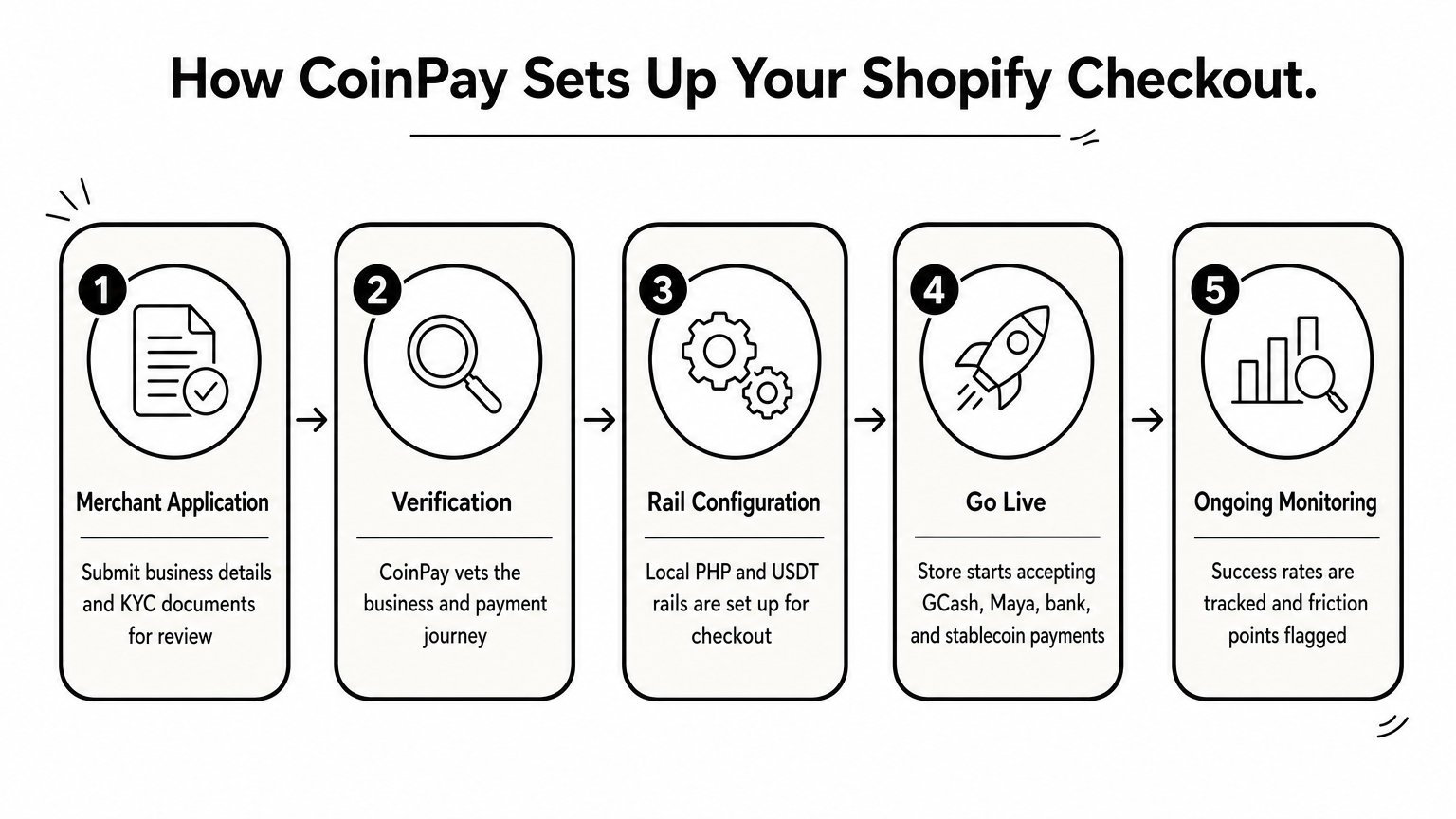
CoinPay connects your Shopify store to GCash, Maya and PHP bank deposits and to USDT settlement for merchants who want stablecoin rails alongside peso transactions. You apply through a structured onboarding process, get verified, and CoinPay configures the gateway around your specific payment journey, whether that's e-commerce checkout, gaming deposits, or a fintech product. The company also monitors payment performance after launch and flags friction points before they cost you conversions, reporting success rates per payment method back to the merchant.
A payment gateway that watches your deposit journey after launch is worth more than one that only worked hard during setup.
Who it's for
CoinPay suits merchants who've already been burned by processors that approve you fast and then go silent when disputes or compliance questions come up. It's a strong fit for gaming and fintech platforms operating across Thailand, Vietnam, the Philippines, Malaysia, Bangladesh, India, and Indonesia that need both local currency settlement and crypto options. If your business involves any grey-area activity like money games or deceptive schemes, CoinPay's strict KYC and due diligence process will reject you, which is exactly the point for merchants who want a compliant, long-term partner.
Fees and settlement
Pricing depends on your market, volume, and whether you're settling in PHP or through USDT deposits and merchant payouts, so CoinPay quotes fees during onboarding rather than publishing a flat rate. Settlement timing follows the payment journey structure, with local rails and crypto settlement handled separately depending on merchant needs.
Setting it up with Shopify
You'll start by submitting a merchant application for review, including business verification and KYC documents. Once approved, CoinPay's team configures the Philippines payment gateway integration for your Shopify checkout, then stays on for ongoing support and performance monitoring rather than a one-time handoff.
2. PayMongo
PayMongo is the closest thing the Philippines has to a native Stripe alternative, and it plugs into Shopify through a dedicated app rather than custom development. If you want a straightforward payment gateway Philippines Shopify merchants can self-serve without a lengthy onboarding call, PayMongo is usually the first name that comes up.
How it works
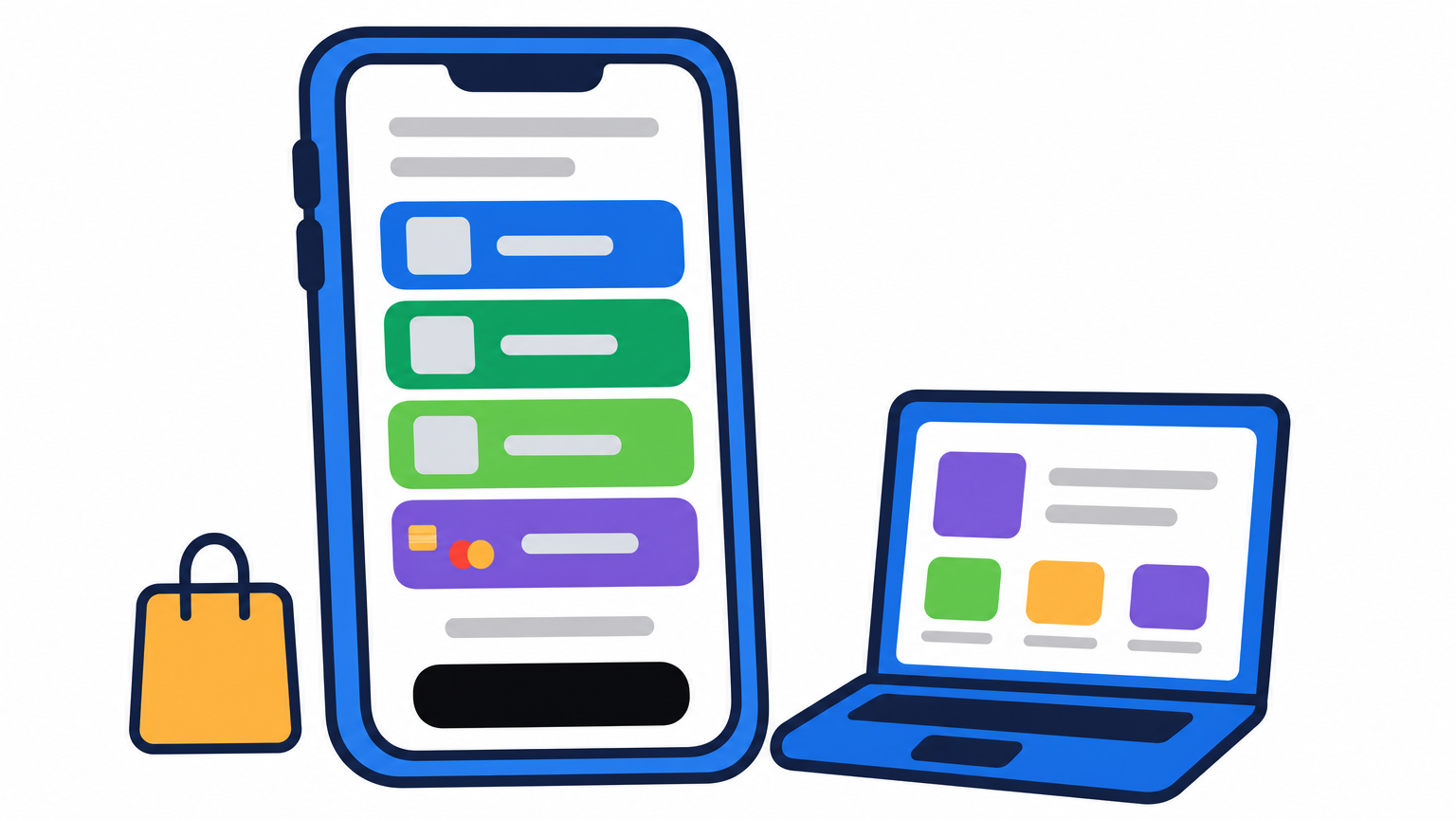
PayMongo issues API keys and a Shopify app that connects your store checkout to GCash, Maya, GrabPay, and card payments within a few clicks. You create an account, verify your business documents, and toggle on the payment methods you want live at checkout. There's no dedicated account manager walking you through friction points, so self-service setup is the trade-off for speed.
Who it's for
Small to mid-sized e-commerce stores that need local wallet coverage fast, without a lengthy vetting process, fit PayMongo well. It's less suited to gaming or fintech merchants who need crypto settlement or hands-on compliance support, since PayMongo focuses strictly on peso-denominated Philippine rails.
Fees and settlement
Standard rates run around 3.5% plus PHP 15 per successful transaction for cards, with e-wallet fees varying by method. Settlement typically lands in your bank account within 3 to 5 business days.
Fast onboarding is only useful if the fee structure still makes sense at your actual transaction volume.
Setting it up with Shopify
Install the PayMongo app from the Shopify App Store, complete KYC verification, then activate it as a payment provider in your Shopify admin settings.
3. Maya Checkout
Maya Checkout comes from one of the country's biggest digital wallets, and that scale shows up in brand recognition at checkout. Shoppers already trust the Maya name from bills payment and remittances, which can lift conversion for stores that lean on local payment methods over generic card forms.
How it works
Maya Checkout works as a hosted payment page that redirects customers from your Shopify cart to a Maya-branded checkout, where they pay via Maya wallet, linked bank account, or card. You register for a Maya Business account, get approved, then drop in the generated API credentials through a Shopify integration or a third-party connector app. The redirect flow means less custom development, but you give up some control over checkout branding.
A recognizable checkout brand can close more sales than a perfectly styled custom form nobody trusts yet.
Who it's for
Retail and e-commerce merchants targeting everyday Filipino consumers benefit most, since Maya's wallet base skews toward regular shoppers rather than niche verticals. It's a weaker match for gaming platforms needing crypto rails or fintech products needing granular API control over the payment flow.
Fees and settlement
Transaction fees generally sit around 3.5% for cards and 2.5% for Maya wallet payments, though negotiated rates apply above certain volumes. Settlement to your linked bank account usually takes 2 to 4 business days after the transaction clears.
Setting it up with Shopify
Sign up for Maya Business, submit verification documents, then connect your account through Shopify's payment integrations panel or a supported third-party app to go live.
4. Xendit
Xendit built its name across Southeast Asia before expanding hard into the Philippines, and it now competes directly with PayMongo for merchants who want a single API covering multiple markets. If you're already planning to sell into Indonesia or Vietnam alongside the Philippines, Xendit's multi-country coverage makes it worth comparing before you commit to a Philippines-only processor.
How it works
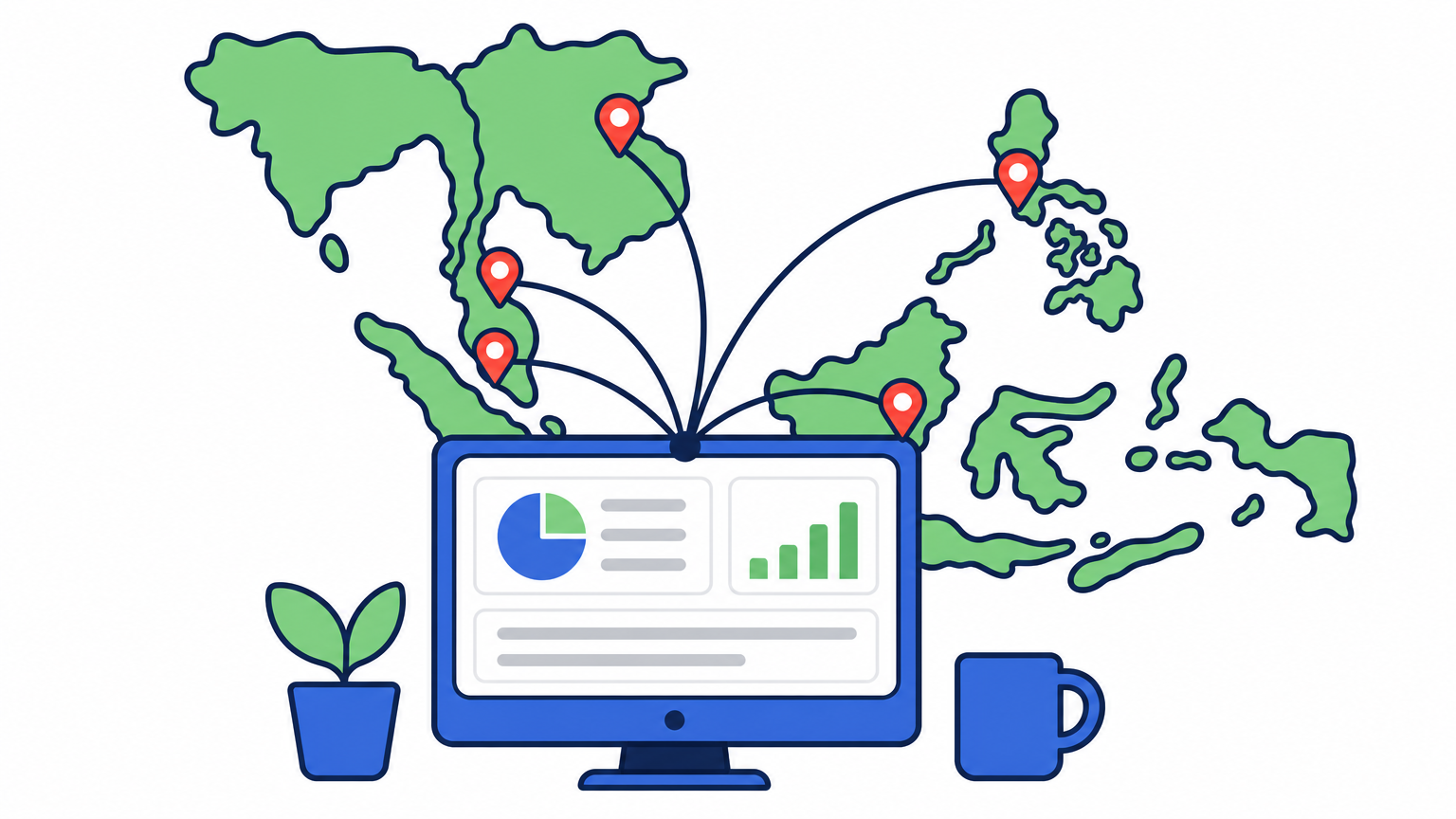
Xendit provides a unified API and dashboard that handles GCash, Maya, GrabPay, over-the-counter payments, and card processing under one integration. You connect it to Shopify through Xendit's own plugin or a middleware app, then manage all your regional payment methods from a single account instead of juggling separate processors per country. The dashboard also gives you disbursement tools if you need to pay out to suppliers or affiliates alongside collecting customer payments.
One API across several markets saves you more engineering time than any single payment method ever will.
Who it's for
Merchants expanding beyond the Philippines into Indonesia, Vietnam bank and e-wallet payments, or Malaysia get the most value here, since Xendit's core pitch is regional consistency rather than deep local specialization. It's a solid fit for fintech and marketplace platforms that need disbursements alongside collections, less so for single-market stores that don't need that extra complexity.
Fees and settlement
Card transactions typically run 3.5% plus a fixed fee, with e-wallet rates varying by method and volume tier. Settlement usually posts to your account within 2 to 5 business days, depending on the payment method and your negotiated terms.
Setting it up with Shopify
Create a Xendit account, complete business verification, then connect it to Shopify using Xendit's official app or a supported third-party payment bridge before activating your preferred payment methods at checkout.
5. DragonPay
DragonPay has been processing Philippine payments since long before GCash and Maya became household names, and it still covers a niche the newer wallets miss: customers who pay in cash or through direct bank transfer. If your Shopify payment gateway Philippines shortlist only includes wallet-first processors, you're likely losing the segment of shoppers who still walk into a 7-Eleven or use online banking instead of an e-wallet.
How it works
DragonPay generates a unique reference number at checkout, which customers use to pay through over-the-counter counters, online banking portals, or remittance centers. You integrate it into Shopify through a supported plugin or middleware connector, and DragonPay confirms payment back to your store once the customer completes the transaction offline or through their bank app.
Cash and bank-transfer shoppers don't disappear just because wallets got popular, and DragonPay still catches that volume.
Who it's for
Merchants selling to customers in provincial areas or older demographics without wallet adoption benefit most, since DragonPay's OTC network reaches banks and remittance centers wallets don't touch. It's a weaker fit if your buyers are mostly urban, wallet-first shoppers already covered by GCash or Maya.
Fees and settlement
Fees typically range from PHP 20 to PHP 25 per OTC transaction, with bank transfer fees varying by partner bank. Settlement usually takes 3 to 7 business days depending on the payment channel used.
Setting it up with Shopify
Register a DragonPay merchant account, get verified, then connect it to Shopify through a supported integration app before activating your OTC and bank payment channels.
Picking the right gateway for your store
Matching your gateway to your business model matters more than chasing the lowest fee on paper. PayMongo and Maya Checkout suit merchants who want fast, self-service setup for straightforward e-commerce. Xendit fits stores expanding across Southeast Asia, and DragonPay still catches the cash and bank-transfer shoppers wallets miss. But if you're running gaming, fintech, or any platform with real payment friction, a self-service widget won't catch the problems that cost you conversions after launch.
That's where a hands-on payment partner pays off. You get someone who vets your business properly, configures local and USDT rails around your actual deposit journey, and stays on to monitor performance instead of disappearing after integration. If that sounds like what your store actually needs going into 2026, talk to CoinPay about your Philippine checkout and see how the setup fits your business.